Building an effective compliance management system isn’t just about checking boxes – it’s about creating a framework that protects your business while enabling growth. So many organizations end up with compliance programs that exist only on paper, leaving them vulnerable to costly penalties and reputational damage.
This article is for compliance officers, risk managers, and business leaders who need to build or improve their Compliance Management System (CMS) implementation strategy. You’ll learn practical approaches that go beyond basic regulatory requirements to create systems that actually work in the real world.
We’ll walk through understanding what makes a compliance management system truly effective, examining the essential components that drive success in any organization. You’ll discover how to build a strategic implementation approach that fits your business needs and resources. Finally, we’ll cover how to measure and continuously optimize your CMS performance to ensure it delivers lasting value and keeps pace with changing regulatory requirements.
Understanding What Makes a Compliance Management System Effective
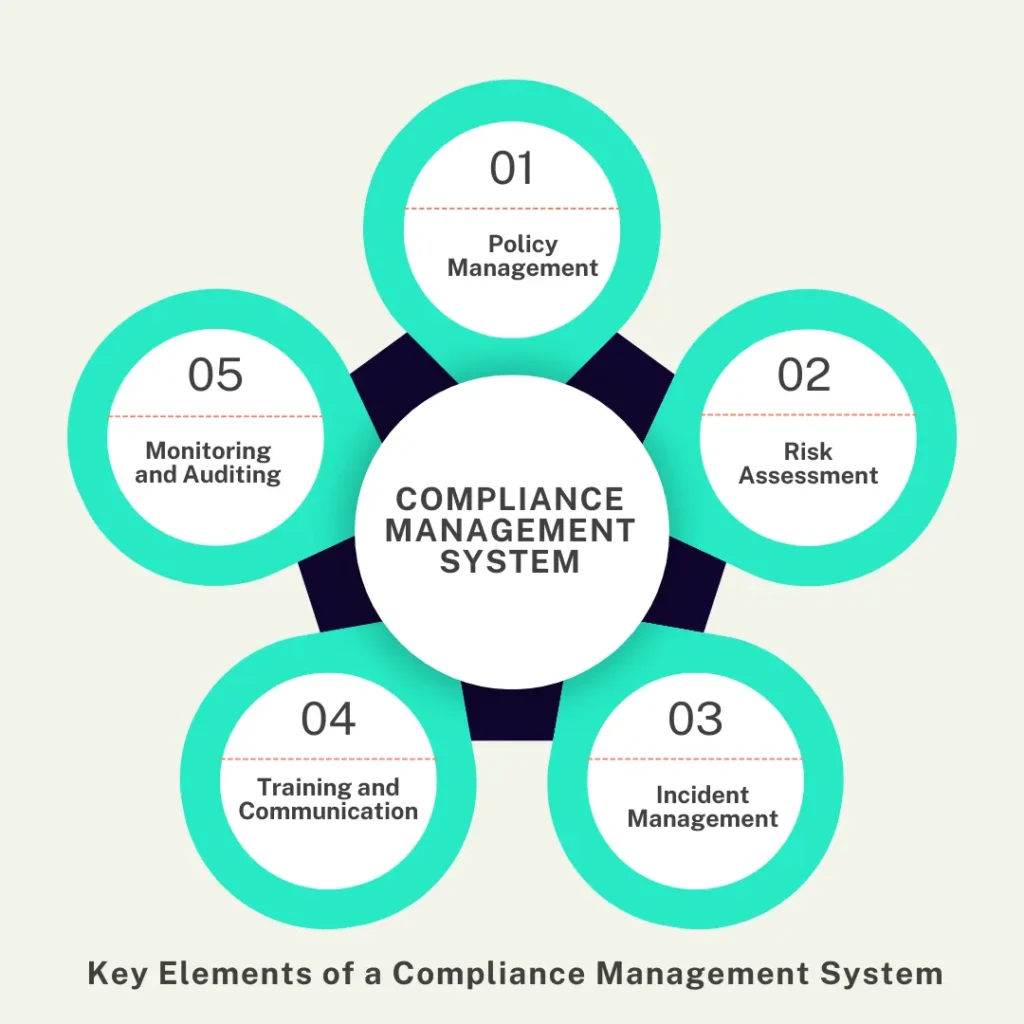
A compliance management system (CMS implementation) serves as your organization’s central nervous system for handling regulatory requirements, internal policies, and risk mitigation. Think of it as a comprehensive platform that connects all your compliance activities under one roof, making sure nothing falls through the cracks.
The framework typically includes several interconnected components. Document management sits at the foundation, housing all your policies, procedures, and regulatory documentation in a searchable, version-controlled environment. Next comes workflow automation, which routes tasks and approvals through predefined paths, ensuring consistent processes across your organization. Risk assessment modules help identify potential compliance gaps before they become costly problems.
Monitoring and reporting capabilities provide real-time visibility into your compliance posture. These systems track deadlines, generate audit trails, and create dashboards that show exactly where you stand against various regulatory requirements. Integration capabilities ensure your CMS talks to other business systems like HR, finance, and operations platforms.
Modern regulatory compliance software includes artificial intelligence features that can analyze patterns, predict potential issues, and recommend corrective actions. The best compliance frameworks also incorporate training management, helping ensure your team stays current with changing regulations and internal policies.
Key Benefits of Risk Management and Automation
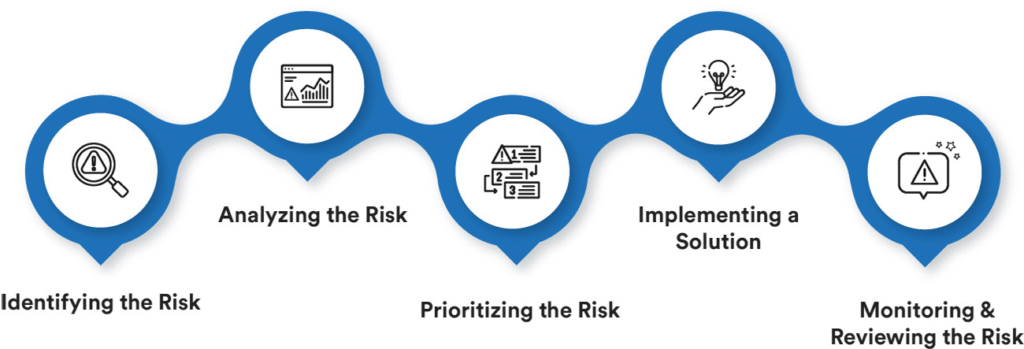
Automation transforms how organizations handle compliance tasks, removing the manual burden that often leads to human error and missed deadlines. When your compliance automation tools handle routine tasks like policy updates, training assignments, and deadline reminders, your team can focus on strategic activities that drive business value.
Risk management system integration provides early warning signals about potential compliance violations. Instead of discovering problems during audits, you can identify and address issues proactively. This shift from reactive to preventive compliance management dramatically reduces your exposure to regulatory penalties and reputational damage.
GRC software solutions streamline communication across departments, breaking down silos that often create compliance blind spots. When legal, IT, HR, and operations teams work from the same platform, coordination improves and accountability becomes crystal clear. Everyone knows their responsibilities and can track progress in real time.
Data accuracy improves significantly with automated systems. Manual spreadsheets and email chains create version control nightmares and increase error rates. Centralized compliance monitoring systems ensure everyone works with current information and maintain complete audit trails for regulatory inspections.
Competitive Advantages and Cost Savings from Compliance
Strong compliance program effectiveness creates tangible business advantages beyond avoiding penalties. Organizations with robust compliance frameworks often win more contracts, especially in regulated industries where clients demand proof of proper governance. Your CMS becomes a competitive differentiator that opens doors to new business opportunities.
Cost savings materialize in multiple areas. Reduced legal fees come from fewer violations and faster response times during regulatory inquiries. Insurance premiums often decrease when carriers see evidence of proactive risk management. Employee productivity increases when clear processes eliminate confusion and rework.
| Cost Benefit Area | Typical Savings | Time to Realize |
| Legal fees reduction | 30-50% | 6-12 months |
| Audit preparation time | 40-60% | 3-6 months |
| Training efficiency | 25-35% | 3-9 months |
| Penalty avoidance | 80-95% | 12-18 months |
Regulatory risk management systems help organizations respond faster to changing regulations. When new rules emerge, you can quickly assess impact, update procedures, and communicate changes across your organization. This agility prevents compliance gaps during transition periods when many companies struggle.
The reputation benefits compound over time. Organizations known for strong compliance attract better talent, more favorable vendor terms, and increased customer trust. These intangible benefits often exceed the direct cost savings from avoided penalties and improved efficiency.
Essential Components That Drive Compliance Management Success
Your compliance management system needs rock-solid policies as its foundation. Think of these as your organization’s constitution – they define what’s acceptable and what crosses the line. Strong policies cover data protection, financial reporting, operational procedures, and industry-specific requirements that apply to your business.
Security protocols work hand-in-hand with policies to protect sensitive information and maintain regulatory compliance software standards. These protocols should address access controls, data encryption, incident response procedures, and regular security assessments. A comprehensive compliance framework requires both preventive measures and reactive protocols that kick in when issues arise.
Document everything clearly and make sure your policies align with current regulations. Your regulatory compliance software should integrate seamlessly with these policies, automating enforcement where possible and flagging violations in real-time.
Entity-Level Control and Monitoring Systems
Entity-level controls set the tone for your entire organization. These high-level controls include your code of conduct, ethics policies, and governance structures that influence how everyone behaves. Your board of directors, senior management, and organizational culture all play crucial roles here.
Monitoring systems act as your early warning network, constantly scanning for compliance issues before they become major problems. Modern GRC software solutions offer automated monitoring capabilities that track key risk indicators, regulatory changes, and compliance metrics across all business units.
Your monitoring system should include:
- Real-time dashboards showing compliance status
- Automated alerts for policy violations
- Trend analysis to identify emerging risks
- Integration with existing business systems
The best monitoring systems don’t just collect data – they provide actionable insights that help you make informed decisions about risk management and compliance priorities.
Employee Training and Internal Audit Management
Your people are your first line of defense against compliance failures. Regular training ensures everyone understands their responsibilities and knows how to handle compliance-related situations. Training programs should cover general compliance principles, role-specific requirements, and updates on regulatory changes.
Make training engaging and relevant. Use real-world scenarios, interactive modules, and regular refresher sessions. Track completion rates and test comprehension to ensure your investment in training actually pays off.
Internal audit management provides independent oversight of your compliance program effectiveness. Internal auditors should have direct access to senior management and the board, with sufficient resources to conduct thorough assessments. Your compliance monitoring system should support audit planning, execution, and follow-up activities.
Effective internal audit programs include:
- Risk-based audit planning
- Standardized audit procedures
- Clear reporting protocols
- Robust follow-up on findings
Certification Mechanisms and Evidence Collection
Certification processes validate that your controls are working as designed. These mechanisms include management attestations, third-party assessments, and automated validation routines built into your regulatory risk management systems.
Evidence collection is where many organizations struggle. You need systematic processes for gathering, organizing, and preserving evidence that demonstrates compliance. This includes transaction logs, approval records, training certificates, audit reports, and correspondence with regulators.
Your compliance automation tools should streamline evidence collection by automatically capturing relevant data points and organizing them for easy retrieval during audits or regulatory inquiries. Create centralized repositories where evidence is properly categorized, time-stamped, and linked to specific compliance requirements.
Strong certification mechanisms include:
- Regular management self-assessments
- Independent third-party reviews
- Automated control testing
- Continuous monitoring of key controls
The goal is creating an audit trail that clearly demonstrates your organization’s commitment to compliance and provides regulators with the transparency they need to validate your efforts.
Building Your CMS: Implementation Strategy
Before jumping into any compliance management system implementation, you need to map out exactly what your organization faces from a regulatory standpoint. Start by conducting a comprehensive compliance audit that identifies all applicable regulations, industry standards, and internal policies your business must follow. This isn’t just about collecting a list of rules—dig deep into understanding how each requirement impacts your daily operations.
Create detailed stakeholder interviews across departments to uncover pain points in your current compliance processes. Talk to legal teams, operations managers, IT staff, and frontline employees who actually handle compliance tasks. These conversations will reveal gaps between what leadership thinks happens and what actually occurs on the ground.
Document your current compliance workflow from start to finish. Map out every step, every handoff, and every approval process. This baseline assessment becomes your roadmap for improvement and helps you identify where compliance automation tools can make the biggest impact.
Don’t forget to assess your organization’s risk tolerance and appetite. Some companies need bulletproof compliance frameworks with multiple layers of verification, while others can operate with streamlined processes. Understanding this balance early prevents over-engineering your solution.
System Selection and Evaluation Criteria
Choosing the right regulatory compliance software requires a systematic evaluation approach that goes beyond flashy demos and sales presentations. Start by creating a weighted scoring matrix that reflects your organization’s specific priorities.
Technical capabilities should top your evaluation list. Look for systems that offer robust workflow automation, real-time monitoring, and flexible reporting capabilities. The best GRC software solutions integrate seamlessly with your existing technology stack without requiring massive infrastructure changes.
Consider these key evaluation criteria:
- Scalability: Can the system grow with your business and handle increased regulatory complexity?
- User Experience: Will your team actually want to use this system daily?
- Customization Options: Does it adapt to your unique compliance requirements?
- Integration Capabilities: How well does it play with your current software ecosystem?
- Vendor Support: What level of ongoing assistance and training do they provide?
Request detailed product demonstrations using your actual compliance scenarios, not generic examples. Ask potential vendors to walk through specific regulatory requirements your organization faces. This approach reveals how well the compliance monitoring system handles real-world complexity.
Get references from companies in your industry or with similar regulatory challenges. These conversations provide honest insights about implementation difficulties, ongoing costs, and actual system performance.
Configuration, Customization and Integration Steps
Rolling out your chosen compliance management system requires careful planning and phased execution. Start with a pilot program focusing on one specific regulatory area or department. This approach lets you test configurations and identify integration challenges without disrupting your entire compliance program.
Begin configuration by setting up your compliance framework within the system. This involves creating policy libraries, establishing approval workflows, and defining user roles and permissions. Take time to customize dashboards and reporting templates to match how your team actually works.
Integration planning deserves special attention because this step often determines success or failure. Map out all systems that need to connect with your new CMS implementation—from HR databases to financial systems to document management platforms. Create detailed integration timelines and test each connection thoroughly before going live.
Data mapping becomes critical during this phase. Identify which information flows between systems and establish clear protocols for maintaining data accuracy. Poor data quality can undermine even the most sophisticated risk management system.
Set up automated notifications and alerts that align with your organization’s communication preferences. Too many alerts create noise and reduce effectiveness, while too few leave gaps in oversight.
User Training and Data Migration Best Practices
Successful user adoption starts long before your compliance management system goes live. Create a comprehensive training strategy that addresses different user types and their specific needs. Compliance officers need deep system knowledge, while occasional users need streamlined guidance for their specific tasks.
Develop role-based training materials that focus on practical, day-to-day scenarios. Instead of generic system overviews, create training modules that walk users through their actual compliance responsibilities using the new system. This approach builds confidence and reduces resistance to change.
Data migration requires meticulous planning and validation. Start by cleaning your existing compliance data—remove duplicates, standardize formats, and verify accuracy. Create detailed mapping documents that show exactly how information transfers from old systems to your new compliance monitoring system.
Run multiple migration tests using subsets of your data before attempting a full transfer. This testing reveals formatting issues, missing fields, and integration problems while you still have time to fix them. Always maintain complete backups of your original data throughout the migration process.
Establish a support structure that includes super-users within each department. These internal champions can provide immediate help and feedback during the initial rollout period. Their insights help identify training gaps and system improvements that enhance long-term adoption rates.
Plan for gradual rollout rather than a big-bang approach. This strategy allows you to address issues and refine processes without overwhelming your team or compromising compliance obligations.
Measuring and Optimizing CMS Performance
Success in compliance management system implementation demands measurable outcomes. Your organization needs specific metrics that demonstrate regulatory compliance effectiveness beyond simple checkbox completion.
Track compliance audit scores across all regulatory domains. Most effective organizations maintain scores above 85% on initial audits, with improvement trajectories showing 10-15% year-over-year enhancement. Monitor exception closure rates – leading companies resolve 90% of compliance exceptions within 30 days of identification.
Regulatory incident frequency serves as a critical barometer. Measure the number of regulatory violations, enforcement actions, and compliance breaches per reporting period. High-performing organizations typically see incident rates decrease by 40-60% within the first 18 months of robust CMS implementation.
Cost per compliance activity provides insight into system efficiency. Calculate total compliance program costs divided by the number of compliance activities managed. Benchmark this against industry standards to identify optimization opportunities.
Policy adherence rates reveal gaps in your compliance framework. Track the percentage of employees following established procedures through regular sampling and monitoring. Target adherence rates should exceed 95% for critical regulatory requirements.
Control Effectiveness and Security Assessment Methods
Regular control testing validates your compliance management system’s operational effectiveness. Establish systematic approaches that provide reliable assurance while minimizing business disruption.
Design your testing methodology around risk severity and regulatory impact. High-risk controls require quarterly testing, while lower-risk areas may warrant annual reviews. Document control design effectiveness and operational effectiveness separately – many organizations discover well-designed controls fail in execution.
Sample size determination affects testing reliability. For large populations, statistical sampling provides cost-effective coverage. Smaller control populations often require 100% testing to achieve meaningful assurance levels.
Deploy continuous monitoring tools that flag control failures in real-time. Automated exception reporting reduces manual oversight burden while improving detection speed. Configure threshold alerts based on control criticality and regulatory requirements.
Data integrity checks validate control inputs and outputs automatically. Schedule these validations to run during low-usage periods to minimize system performance impact.
Employee Awareness and Training Program Evaluation
Training effectiveness directly correlates with compliance program success. Your evaluation methods should measure knowledge retention, behavioral change, and practical application of compliance concepts.
Pre and post-training assessments quantify learning outcomes. Design assessments that mirror real-world compliance scenarios rather than theoretical knowledge. Aim for 80% pass rates on initial attempts, with remediation pathways for underperforming participants.
Competency tracking across different compliance domains helps identify skill gaps. Create competency matrices that map required skills to job roles and regulatory requirements. Update these matrices annually to reflect changing regulatory landscapes.
Monitor compliance violation patterns before and after training interventions. Effective training programs typically reduce related violations by 50-70% within six months. Track this data by department, seniority level, and training completion dates to identify correlation patterns.
Anonymous feedback surveys capture employee confidence levels and perceived training value. High-quality programs achieve satisfaction scores above 4.2 on 5-point scales, with employees reporting increased confidence in handling compliance situations.
Conclusion
Building a compliance management system that actually works requires more than just checking regulatory boxes – it demands a strategic approach that integrates seamlessly into your business operations. From understanding the essential components like cornerstone policies, security workflows, and monitoring mechanisms, to implementing a robust strategy that includes proper assessment, system configuration, and ongoing optimization, each element plays a critical role in your compliance success. The key lies in measuring performance through regular audits, employee awareness assessments, and continuous monitoring to ensure your CMS evolves with changing regulations and business needs.
The cost of non-compliance far exceeds the investment in a well-designed CMS, with financial penalties, legal investigations, and reputational damage often reaching three times the cost of maintaining compliance. By leveraging automation, establishing clear accountability structures, and fostering a culture of compliance throughout your organization, you can transform compliance from a burden into a competitive advantage. Start by conducting a thorough assessment of your current compliance landscape, select the right tools and frameworks for your needs, and remember that effective compliance management is an iterative process that requires ongoing attention and refinement to truly protect and empower your business.